
3D Printer for Home Use: A Practical Introduction for Everyday Creators
3d printer for home use has moved from a specialist tool into something many households now consider for creativity, repairs, and learning. What was once limited to workshops and labs is now compact, affordable, and suitable for everyday spaces.
This guide explains what a 3d printer for home use offers, how it fits into daily life, and what to expect before getting started. The focus is on clarity, real use cases, and realistic expectations rather than technical hype.
3D Printer for Home Use Explained in Simple Terms
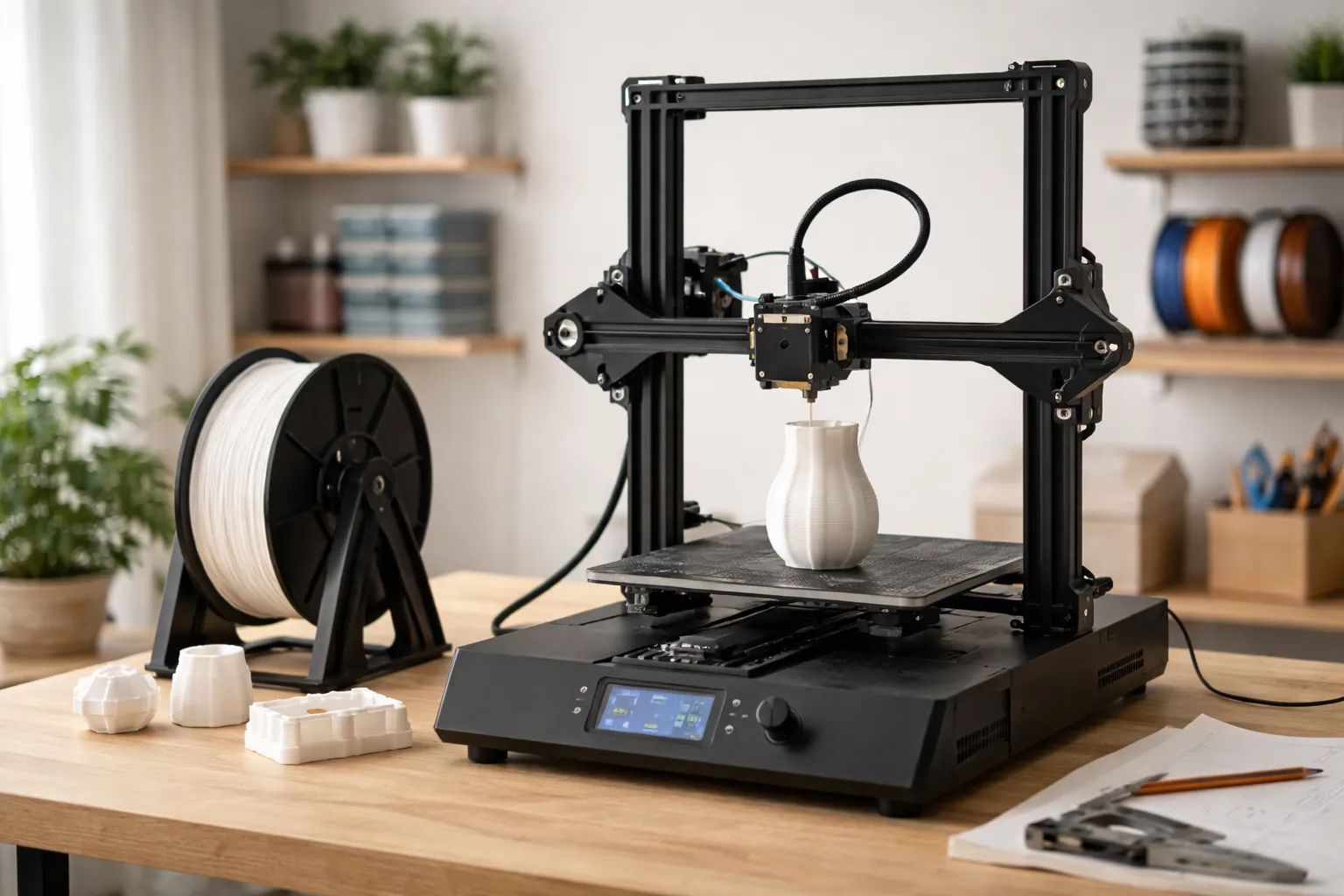
3d printer for home use explained means understanding how desktop 3D printers turn digital designs into physical objects. These printers build items layer by layer using materials such as plastic filament.
A 3d printer for home use typically connects to a computer or memory card where design files are stored. The printer follows those instructions to create objects with consistent shape and structure.
For home users, the appeal lies in flexibility. A 3d printer for home use allows people to create custom items, replace small household parts, or explore creative projects without relying on external services.
Why a 3D Printer for Home Use Appeals to Beginners
3d printer for home use for beginners focuses on accessibility. Modern machines are designed with simpler setup, guided software, and safety features that reduce the learning curve.
Beginners often start with basic projects such as storage hooks, phone stands, or educational models. These early successes build confidence and familiarity with the printing process.
A 3d printer for home use gives beginners control over pace and experimentation. Mistakes become learning opportunities rather than costly setbacks.
Common Uses of a 3D Printer for Home Use
A 3d printer for home use supports a wide range of everyday applications. Many people use it for small repairs, creating replacement clips, knobs, or brackets.
Creative projects are also popular. Decorative items, organisers, and personalised gifts are common outputs from a home 3D printer.
Educational use is another benefit. Families and students use a 3d printer for home use to explore design, engineering concepts, and problem-solving skills.
3D Printer for Home Use Buying Guide Basics
3d printer for home use buying guide considerations begin with space and noise. Home printers are smaller than industrial models, but they still require a stable surface and ventilation.
Build volume matters as well. This determines the maximum size of objects that can be printed. For most home projects, moderate build volume is sufficient.
Ease of maintenance is another key factor. A good 3d printer for home use should offer simple calibration and accessible replacement parts.
Materials Commonly Used in a 3D Printer for Home Use
Most home printers use plastic filaments such as PLA or PETG. These materials are popular because they are easy to print and suitable for indoor environments.
A 3d printer for home use may also support flexible or stronger filaments depending on the model. Each material offers different strengths, finishes, and use cases.
Choosing the right filament helps ensure successful prints and reduces frustration during learning.
3D Printer for Home Use Best Practices for Reliable Results
3d printer for home use best practices focus on preparation and consistency. Keeping the print bed clean and level improves adhesion and print quality.
Using correct temperature settings for the chosen filament also plays a major role. Small adjustments can make a noticeable difference.
Regular maintenance supports long-term reliability. Simple checks help a 3d printer for home use perform consistently.
3D Printer for Home Use Tips for Everyday Printing
3d printer for home use tips often begin with starting simple. Complex designs increase the chance of errors during early use.
Previewing designs in slicing software allows users to spot issues before printing begins.
Keeping expectations realistic helps maintain motivation while learning how a 3d printer for home use behaves.
3D Printer for Home Use Guide to Setup and First Prints
This 3d printer for home use guide recommends taking time during setup. Proper assembly and calibration set the foundation for good results.
Many manufacturers provide guided setup instructions and test files. Printing these files helps confirm the printer is working correctly.
Early patience often leads to smoother long-term use of a 3d printer for home use.
3D Printer for Home Use Checklist
| Area | Action | Purpose |
|---|---|---|
| Setup | Level the print bed carefully | Improves print adhesion |
| Materials | Select beginner-friendly filament | Reduces printing errors |
| Design | Start with simple models | Builds confidence |
| Maintenance | Clean and inspect regularly | Supports consistent results |
External References Supporting Home 3D Printing
Reliable technical guidance for home 3D printing can be found through resources such as All3DP and MakeUseOf 3D Printing. These sources provide practical insights into printer setup, materials, and everyday use.
Using trusted references helps users make informed decisions and improve results with a 3d printer for home use.
Frequently Asked Questions About 3D Printer for Home Use
1. What is a 3d printer for home use and how does it fit into daily life?
3d printer for home use refers to a compact desktop 3D printer designed to operate safely and efficiently in a household environment. These printers are smaller, quieter, and easier to manage than industrial machines, making them suitable for spare rooms, offices, or workbenches.
In daily life, a 3d printer for home use supports practical problem solving. People use it to create replacement parts, storage solutions, custom tools, and personalised items. It also supports learning, allowing users to explore design and engineering concepts at their own pace.
Rather than being used all day, a 3d printer for home use often becomes a tool that is used when needed. This flexible role makes it a useful addition for creative projects, repairs, and experimentation.
2. Is a 3d printer for home use suitable for beginners?
3d printer for home use for beginners is designed with accessibility in mind. Many modern home printers offer guided setup, automatic calibration, and beginner-friendly software.
Beginners benefit from being able to start with simple designs and gradually build skills. The learning process often includes trial and error, which is normal and expected.
A 3d printer for home use allows beginners to learn without pressure. Mistakes are part of the process and usually involve low material cost, making experimentation affordable.
3. What should beginners know before buying a 3d printer for home use?
A 3d printer for home use buying guide for beginners starts with understanding space, noise, and safety. Home printers should be placed on a stable surface with good airflow.
Beginners should also consider ease of use, availability of replacement parts, and community support. A printer with strong user documentation reduces frustration.
Choosing a reliable entry-level 3d printer for home use helps beginners focus on learning rather than troubleshooting.
4. What are common uses of a 3d printer for home use?
A 3d printer for home use is commonly used for household organisation, small repairs, and creative projects. Popular prints include hooks, containers, and phone stands.
Many users also create educational models or custom parts that are difficult to find in stores.
The flexibility of a 3d printer for home use allows people to solve everyday problems with custom solutions.
5. How does a 3d printer for home use actually work?
3d printer for home use explained means understanding layer-based manufacturing. The printer melts filament and deposits it layer by layer to form an object.
The process begins with a digital design file that guides the printer’s movements.
This controlled layering process allows a 3d printer for home use to produce accurate and repeatable objects.
6. What materials are best for a 3d printer for home use?
Most home users start with PLA filament because it is easy to print and safe for indoor use.
A 3d printer for home use may also support PETG or flexible filaments depending on the model.
Choosing the right material helps ensure successful prints and reduces setup challenges.
7. What are 3d printer for home use best practices?
3d printer for home use best practices include keeping the printer clean, levelling the bed correctly, and using proper temperature settings.
Regular maintenance improves reliability and print quality.
Following best practices helps extend the lifespan of a 3d printer for home use.
8. How noisy is a 3d printer for home use?
A 3d printer for home use produces some noise during operation, mainly from motors and cooling fans.
Most modern models are quiet enough for home environments, especially when placed in a separate room.
Understanding noise levels helps users choose a suitable location.
9. How much electricity does a 3d printer for home use consume?
A 3d printer for home use typically consumes similar electricity to a desktop computer.
Energy use depends on print duration and temperature settings.
For most users, operating costs remain manageable.
10. What safety considerations apply to a 3d printer for home use?
Safety considerations include proper ventilation, avoiding contact with hot components, and supervising prints when possible.
A 3d printer for home use should be kept away from children unless supervised.
Following manufacturer guidelines supports safe operation.
11. How long does it take to learn a 3d printer for home use?
Learning a 3d printer for home use basics usually takes a few days to weeks.
Most users become comfortable after completing several simple prints.
Continued practice builds skill and confidence.
12. Can a 3d printer for home use replace buying items?
A 3d printer for home use can replace buying certain items such as small tools or organisers.
It does not replace all manufactured goods.
Its value lies in customisation and convenience.
13. How reliable are home 3D printers?
A 3d printer for home use is reliable when properly maintained.
Consistency improves with experience and good setup.
Reliable printers support repeatable results.
14. What software is needed for a 3d printer for home use?
A 3d printer for home use guide usually includes slicing software that prepares designs for printing.
Most slicing software is beginner friendly and widely supported.
Software choice affects print quality and ease of use.
15. Is a 3d printer for home use worth it?
A 3d printer for home use is worth it for people who enjoy creating, fixing, or learning.
Its value increases with regular use.
For many households, it becomes a practical creative tool.
Final Takeaway
3d printer for home use offers a practical way to create, repair, and learn from home. With the right expectations and basic knowledge, it becomes a flexible tool that supports creativity and everyday problem solving.